Haze situation
Hotspots, PSI, and whether the wind is bringing someone else's fire
Air Quality
At 2 am on 19 Oct 2026 · Now 2:13am SGT
24-hr PSI
98
north
111
south
115
east
150
west
125
central
Unhealthy
PSI Value — worst region
Highest of the 5 regions (west)
Min
150
Max
230
Current
150
1-hr PM2.5
40
north
54
south
45
east
67
west
67
central
Band 2 — Elevated
1-hr PM2.5 reading (µg/m³) — worst region
Highest of the 5 regions (west)
Min
67
Max
142
Current
67
NEA summary: PSI Forecast: 101 - 190 (Unhealthy)
When Does Haze Affect Singapore?
Southwest Monsoon
June – September
Traditional haze season. Dry weather over Sumatra and Kalimantan increases fire risk; prevailing winds blow smoke toward Singapore.
Northeast Monsoon
December – March
Rainy season typically suppresses fire activity. Haze is rare during this period, though occasionally volcanic ash can affect visibility.
How Haze Forms & Reaches Singapore
Forest & Land Fires
Fires burn peatland and forests in Sumatra, Kalimantan and other parts of ASEAN.
Smoke Particulates Released
Fine particles (PM2.5) rise from burning vegetation and peat.
Winds Carry Smoke
Prevailing winds transport smoke hundreds of kilometres across the region.
Haze Reaches Singapore
PSI and PM2.5 climb, sometimes into Unhealthy or Hazardous bands.
Current Haze Situation
ASMC Alert Level 3 — severe transboundary haze risk
Updated 18 Oct, 5:52 pm SGT
Air Quality
PSI Forecast: 101 - 190 (Unhealthy)
Latest Weather and Haze Situation
Dry weather continued over the southern ASEAN region today, except for showers observed over Peninsular Malaysia as well as the northern parts of Sumatra and Borneo. Widespread hotspots were detected in Kalimantan and Sumatra. Moderate to dense smoke plumes were observed to emanate from hotspots detected in the southern parts of Sumatra and Kalimantan. Moderate to dense smoke haze was observed over Papua. Air quality stations in parts of Kalimantan and Sumatra reported Unhealthy to Hazardous levels. The full extent of the hotspot situation over Kalimantan and Sumatra could not be determined due to obscuration by thick smoke haze and cloud cover, while the smoke haze situation over parts of the region could not be fully determined due to cloud cover. Isolated showers were observed over the northern ASEAN region, apart from the northern and central parts of the Mekong sub-region where it was relatively drier. Hotspot activity over the northern ASEAN region remained low.
Weather and Haze Outlook
Over the next few days, the southern ASEAN region is expected to remain dry, apart from Peninsular Malaysia, the northern and central parts of Sumatra, and parts of Borneo where showers are forecast. Although the showers may bring some respite, the hotspot and smoke haze situation is likely to remain elevated especially over areas experiencing prolonged dry conditions, with a continued risk of severe transboundary haze occurrence. The prevailing winds over the southern ASEAN region are expected to blow generally from the southeast to southwest, except for parts of Boneo where the winds are forecast to be light and variable in direction. Wet weather is likely to continue over the northern ASEAN region, except over the northern parts of the Mekong sub-region where relatively drier conditions are expected. Hotspot activity is forecast to stay low. The prevailing winds over the northern ASEAN region are likely to blow from the north to east, except over the northern parts of the Mekong sub-region where the winds are expected to be light and variable in direction.
Health Advisory
Healthy persons :PSI Forecast-Unhealthy. To plan for 19 Oct, reduce prolonged or strenuous outdoor physical exertion. For immediate outdoor activities, use 1h PM2.5. If Elevated PM2.5, reduce strenuous outdoor activity. Elderly, pregnant women & children :PSI Forecast-Unhealthy. To plan for 19 Oct, minimise prolonged or strenuous outdoor physical exertion. For immediate outdoor activities, use 1h PM2.5. If Elevated PM2.5, avoid strenuous outdoor activity for the next hour. Persons with chronic lung/heart disease :PSI Forecast-Unhealthy. To plan for 19 Oct, avoid prolonged or strenuous outdoor physical exertion. For immediate outdoor activities, use 1h PM2.5. If Elevated PM2.5, avoid strenuous outdoor activity for the next hour.
Narratives and advisories are published by MSS/NEA and the ASEAN Specialised Meteorological Centre. Hotspots are satellite-detected and can be obscured by cloud cover or thick smoke.
Regional Hotspot Monitoring
Satellite-detected hotspots by region in the latest pass (18 Oct, 12:56 am SGT)
| Region | Hotspots detected | Share of total |
|---|---|---|
| Kalimantan | 277 |
|
| Sulawesi | 148 |
|
| Nusa Tenggara | 131 |
|
| Java | 27 |
|
| Sumatra | 25 |
|
| Maluku | 23 |
|
| East Timor | 21 |
|
| Irian Jaya | 5 |
|
| Cambodia | 4 |
|
| Vietnam | 4 |
|
| Sabah & Sarawak | 2 |
|
| Myanmar | 1 |
|
| Thailand | 1 |
|
| Philippines | 1 |
|
High Alert
Many hotspots across Sumatra or Kalimantan with dry weather and winds blowing toward Singapore.
Monitor
Scattered hotspots with mixed cloud cover or unfavourable wind direction.
Low Risk
Few or no hotspots, or rainy conditions suppressing fire activity.
Major Haze Episodes Affecting Singapore
| Year | Peak 24-hr PSI | Source Region | Notes |
|---|---|---|---|
| 1997 | 226 | Sumatra & Kalimantan | One of the worst on record; linked to a strong El Niño and prolonged drought. |
| 2013 | 401 (“PSI record”) | Central Sumatra (Riau) | The “haze crisis”: PSI crossed 400 for the first time, prompting the Transboundary Haze Pollution Act. |
| 2015 | 341 | Sumatra & Kalimantan | Another strong El Niño year; studies estimated S$1.8 billion in economic losses in Singapore. |
| 2019 | ~164 | Kalimantan & Sumatra | Mid-September spike; schools scaled back outdoor activities. |
PSI values shown are the peak 24-hour national readings reported by NEA during each episode. The worst episodes typically coincide with strong El Niño years and prolonged dry spells over southern Sumatra and Kalimantan.
Haze Safety Tips
If PSI is Moderate (51–100)
- Normal activities can continue
- Sensitive groups should watch for symptoms
If PSI is Unhealthy (101–200)
- Reduce outdoor physical exertion
- Children, elderly and pregnant women should stay indoors
- Drink plenty of water
If PSI is Very Unhealthy (201–300)
- Avoid outdoor activity
- Wear N95 masks if you must go out
- Use air purifiers indoors
If PSI is Hazardous (> 300)
- Minimise all outdoor activity
- Seal doors and windows
- Seek medical attention if unwell
Related Information
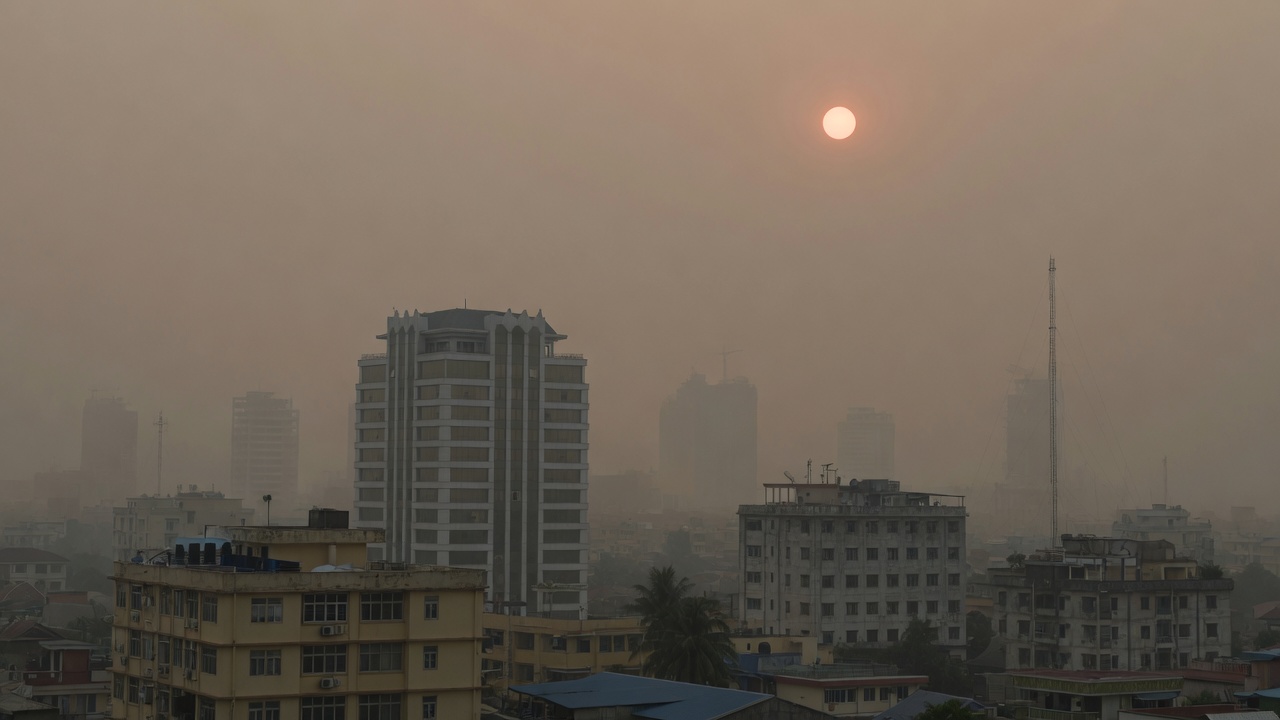
Haze is almost never local
Smoke from fires in Sumatra and Kalimantan, on southwest winds. The usual window is June to September. December rain typically kills it. The worst years were 1997, 2013, 2015 and 2019.
Three checks: 1-hour PM2.5 for the earliest move, 24-hour PSI for the official advisory, hotspot counts for a warning a day or two out. Haze ends when it rains on the fires or the wind turns. ASMC's outlook is the honest "when will it end" source, not a guess on this page.