Lightning in Singapore
Cloud-to-ground lightning, detection and safety
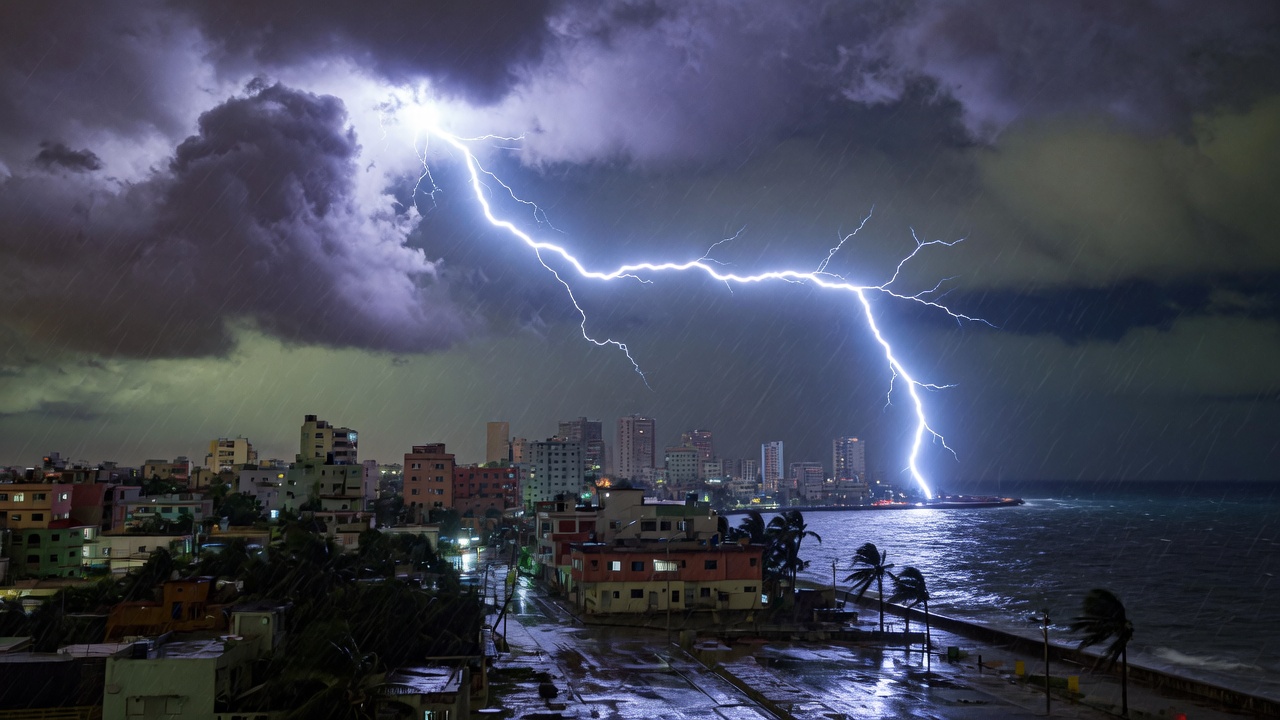
30 seconds
Get inside
If thunder follows the flash by 30 seconds or less, the storm is close enough to strike. A building or a hard-topped car. Not a bus stop, not a tree.
30 minutes
Stay inside
Wait half an hour after the last thunder. The trailing edge of a cell still throws bolts after the rain looks finished.
Singapore has one of the highest lightning rates in the world — after Indonesia and Colombia, Malaysia and Singapore rank among the most lightning-active countries on Earth. Cloud-to-ground (CG) lightning is the most common type reported in Singapore. When thunder is heard, move indoors immediately and wait at least 30 minutes after the last thunder before going back out.
Lightning Facts for Singapore
~170
Thunder days / year
10–16 km
Strike distance from storm
30 / 30
Lightning safety rule
~300M V
Volts per strike
Around 70% of the world’s lightning occurs on land within the tropics, and Singapore sits squarely in that belt. Cloud-to-ground lightning makes up roughly 10% of all flashes in the tropics (the rest are intra-cloud and cloud-to-cloud) but causes nearly all lightning injuries and damage.
Lightning Safety Tips
Do
- Seek shelter inside a substantial building
- Get inside a hard-topped, closed vehicle
- Unplug sensitive electronics before the storm
- Stay indoors for 30 minutes after the last thunder
- Check weather warnings before outdoor activities
Don’t
- Stay under tall trees, poles or umbrellas
- Use corded phones or plugged-in electronics
- Take a shower or wash dishes during a storm
- Stand in open fields or on high ground
- Touch metal objects like fences or railings
Types of Lightning
Cloud-to-Ground (CG)
The most dangerous. Discharge between cloud and ground. Detected by lightning sensors and shown on the lightning map. NEA confirms CG is the most common lightning type reported in Singapore.
Intra-Cloud (IC)
Most common worldwide. Discharge within a single cloud. Visible as flickering flashes. In the tropics the (IC+CC):CG ratio is about 9:1, so for every cloud-to-ground strike there are roughly 9 cloud-only flashes.
Cloud-to-Cloud (CC)
Discharge between two clouds. Less dangerous on the ground but still indicates active storms.
Lightning Detection in Singapore
The Meteorological Service Singapore (MSS) operates a lightning detection network that locates cloud-to-ground strikes in real time using the electromagnetic pulse each bolt emits. Sensors triangulate the strike location, and the result is published on the MSS weather portal as the live lightning map. Cloud-to-cloud and intra-cloud flashes are not shown on this map because they do not pose a direct ground hazard.
Real-time map
Live CG strike locations updated every few minutes on the MSS weather portal.
Alerts
MSS issues lightning alerts when CG activity is detected near populated areas.
When CG strikes peak
Mostly in the afternoon (13:00–17:00 SGT) during the inter-monsoon periods (Apr–May and Oct–Nov).
Related Information
Why Singapore gets so much of this
MSS estimates around 170 thunder days a year. April, May, October and November are the worst. Cloud-to-ground flashes are a minority of all lightning but almost all of the injuries. A nowcast of thundery showers means assume lightning, even if you have not heard it yet. Pair that with the radar and the safety guide.