6 min read
Flash floods in Singapore
Singapore floods are usually short, local, and driven by intense rain on a small urban catchment. Do not drive into the water.
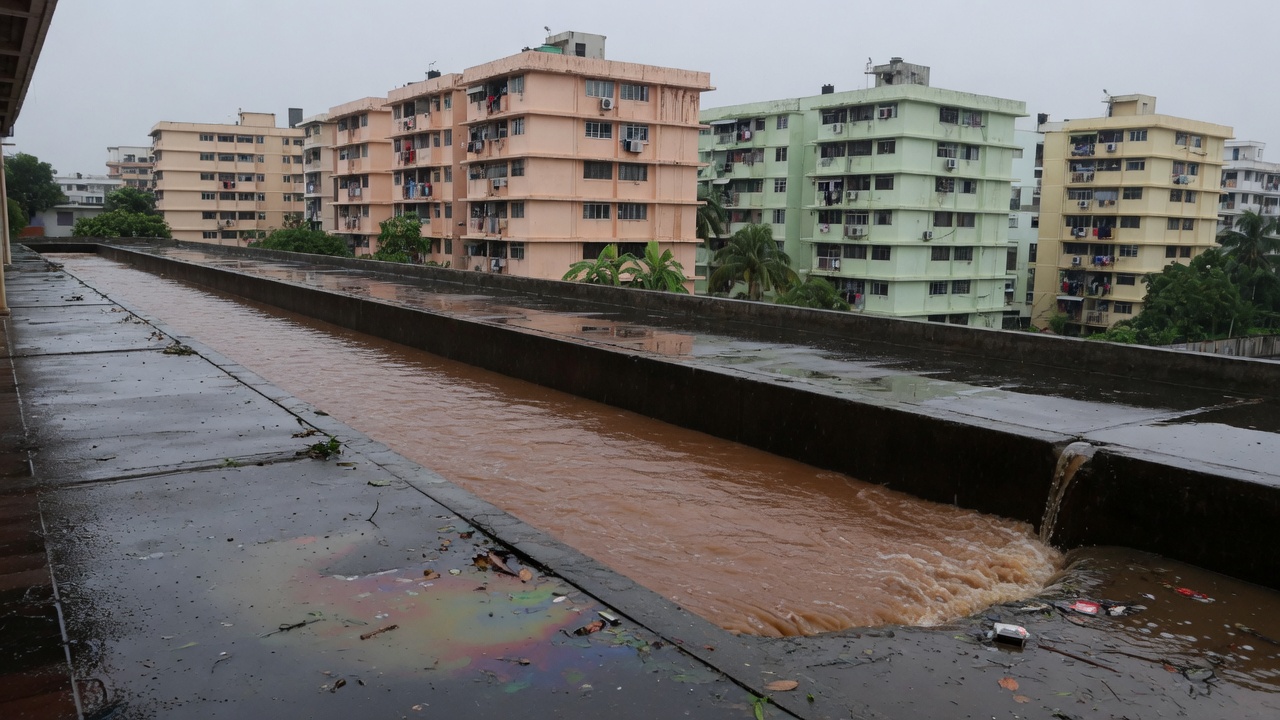
Two flavours
- Convective flash flood: a stalled thunderstorm dumps 40-80 mm in less than an hour on a drain that cannot take the peak. Common in the inter-monsoon.
- Monsoon-surge flood: hours of widespread rain saturate the island. December 2006 is the textbook case.
Why a rich city still floods
Concrete and canalised drains move water fast, which is good until the peak rainfall rate exceeds the design. Underpasses, low points of arterial roads, and older estates sit in those peaks. Drainage upgrades have cut the number of chronic spots, but they cannot erase a 512 mm day or a 70 mm/hour cell.
If water is on the road
- Turn around. Depth is not obvious, and a kerb or open drain can be under the surface.
- Do not walk through fast-moving water to "see if it is shallow".
- Once home, PUB and town councils handle debris and pumps. Report a burst or overflowing drain through the official channels, not only social media.
Questions
Where do flood alerts come from?
We ingest the data.gov.sg weather flood-alerts feed and show active items on the floods page. Official response sits with PUB and SCDF.
Does the radar predict floods?
No. Red on radar plus a cell that is not moving is a hint, not a flood forecast. The alert is issued when water levels or reports justify it.
Independent guide based on publicly described NEA and Meteorological Service Singapore products. Not affiliated with NEA.