7 min read
Northeast Monsoon in Singapore
December to early March. Wet and cool at first, then often dry and windy. This is when Singapore sets rainfall records and also enjoys some of its clearest skies.
Singapore weather year
Four phases, not four seasons. Temperature barely moves. Rain type does.
When it runs
MSS defines the Northeast Monsoon as December to early March. Winds blow from the north or northeast. The Intertropical Convergence Zone sits near or just south of Singapore in the first half, then slides further south.
Wet phase: December to early January
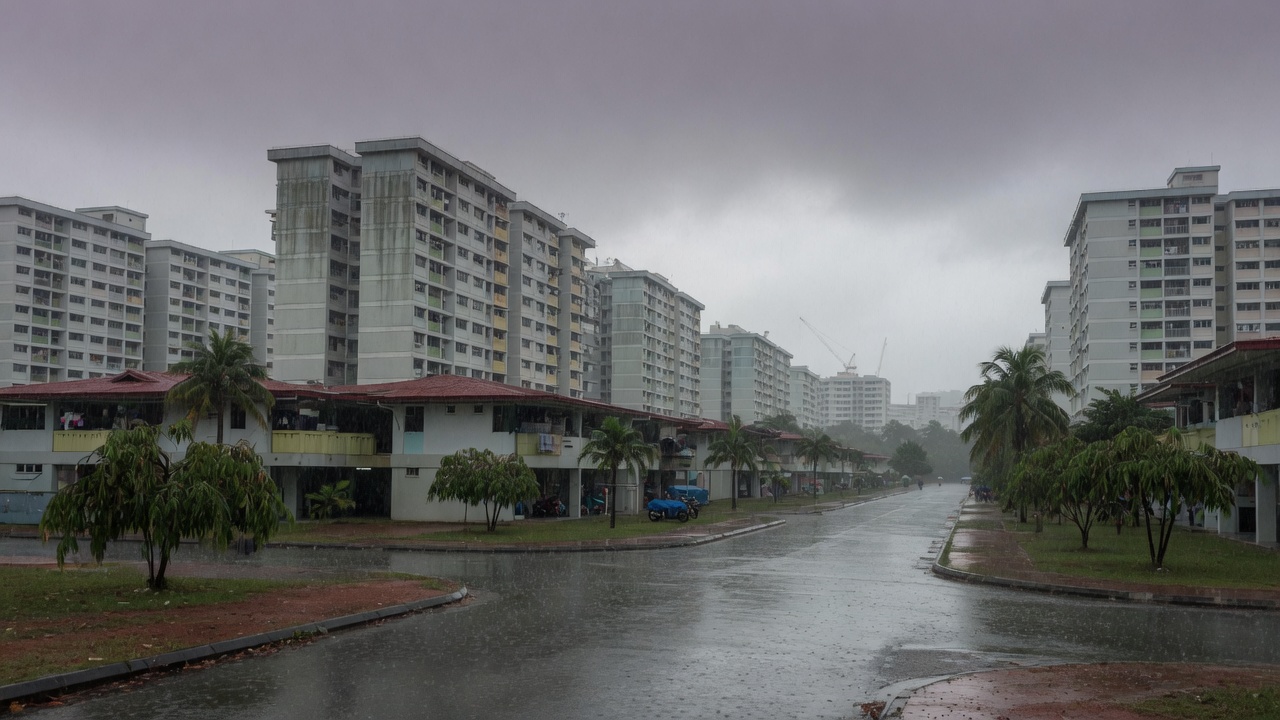
This is the wettest stretch of the year. December averages 331.9 mm at Changi, the highest monthly total in the 1991-2020 normals. Monsoon surges, bursts of cooler northeasterly wind from the South China Sea, can produce hours of widespread moderate to heavy rain rather than a one-hour thunderstorm.
The 19 December 2006 surge still holds the national 24-hour rainfall record at 512 mm. Flooding in that pattern is about duration as much as intensity.
Dry phase: late January to early March
Once the rain-belt parks over Java, Singapore often turns windy and relatively dry. February is the driest month (105.1 mm) and the windiest (mean 2.8 m/s). It also has the fewest thunderstorm and lightning days. Picnic weather is common. Haze is usually not the story in this window.
What it feels like
- Coolest nights of the year, often 23-24°C.
- Lowest 24-hour mean temperatures: 26.8°C in January and December.
- Better visibility except during rain. Morning mist can still form in light winds.
Questions
Is December a bad month to visit?
It is the wettest, but rain often comes in long bands with breaks. It is also cooler. Pack a shell, not just an umbrella.
What is a monsoon surge?
A strengthening of the northeasterly monsoon flow, often after a cold surge from East Asia. It brings persistent widespread rain, not just an afternoon cell.
Independent guide based on publicly described NEA and Meteorological Service Singapore products. Not affiliated with NEA.