7 min read
Southwest Monsoon and Sumatra squalls
June to September is generally drier, but 4am thunderstorms and transboundary haze are the two things that catch people out.
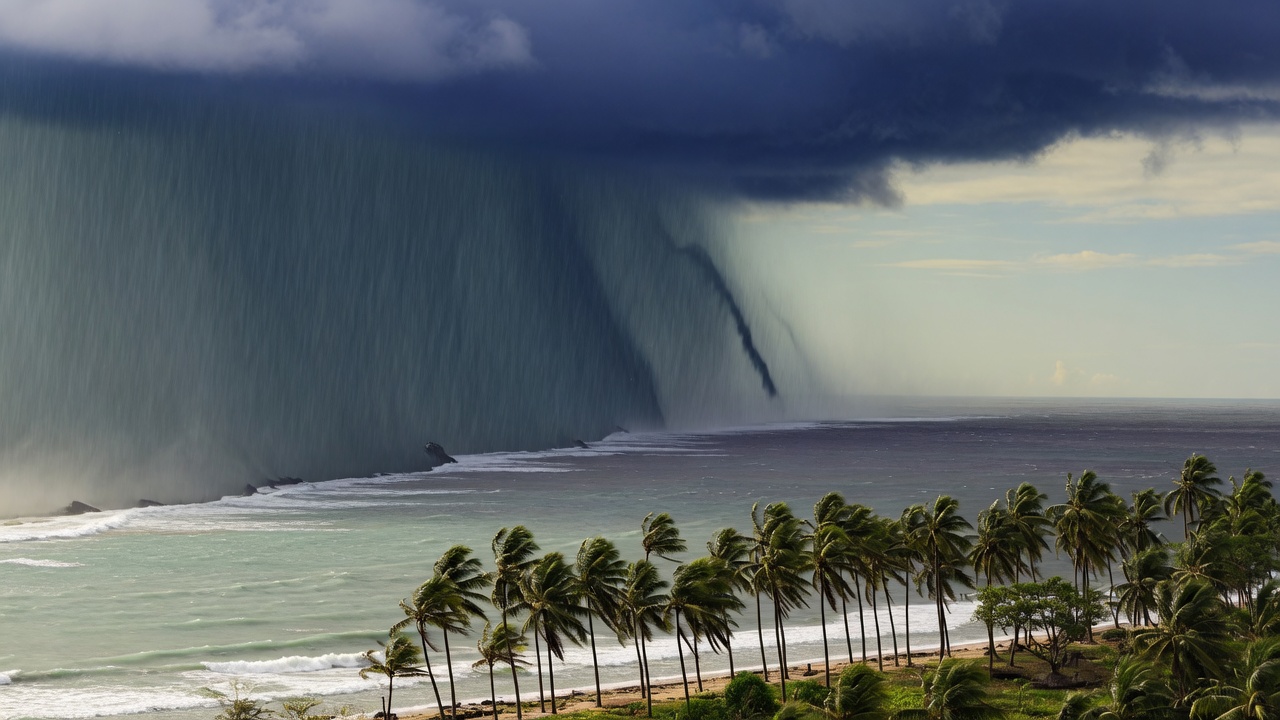
How a Sumatra squall crosses the island
A line of storms that forms over Sumatra, then rides southwest monsoon flow across the Strait. Typical window is 2am to 10am, June to September.
1. Strait
Watch 240 km radar
A solid line west of Tuas is the tell. The 50 km view is still empty at this point.
2. West
Tuas, Jurong, Choa Chu Kang
First landfall. Wind jump, brief heavy rain, then it keeps moving.
3. Central
Bukit Timah, Toa Payoh, City
Often 30 to 60 minutes after the west. Not every line still has punch here.
4. East
Tampines, Bedok, Changi
Last to arrive, often weaker. Some squalls die over the catchment before they get here.
The season
The Southwest Monsoon runs from June to September. Winds blow from the southeast or south. Monthly rainfall at Changi sits in the 125-147 mm range, lower than November-January. Afternoon storms still happen, but they are often shorter.
Sumatra squalls
A Sumatra squall is an organised line of thunderstorms that forms over Sumatra or the Strait of Malacca and travels east across Singapore, usually between predawn and midday. Gusts of 40-80 km/h are common. The line can cross the island in an hour.
On the 240 km radar it looks like a north-south or slightly tilted band west of Tuas. Western towns (Tuas, Pioneer, Jurong West, Choa Chu Kang) get hit first. The city and the east follow. If you only watch the 50 km loop you will see it late.
Haze window
This is the traditional transboundary haze season. Fires in Sumatra and Kalimantan, plus southwesterly to southerly winds, can push smoke over Singapore. Not every year is bad. Strong El Niño years (2015, and to a lesser extent 2019) have produced the worst episodes. La Niña years are often quieter.
Questions
What time do Sumatra squalls usually arrive?
Most often between about 4am and noon. A line that is still west of the Strait at 7am can still reach town before lunch.
Are they dangerous?
The rain band is brief but gusty. Secure loose objects, pause tower-crane and drone work, and do not shelter under isolated trees.
Independent guide based on publicly described NEA and Meteorological Service Singapore products. Not affiliated with NEA.